

Therapy for Teens
in-person in Oakland and Berkeley; online in California
You're here because you love your kid, but you're worried about them—they seem overwhelmed and moody, they're more distant than they used to be, and they're shutting you out. It's equal parts frustrating and painful. You're desperate to find someone who they'll actually open up to—and maybe you've already tried multiple therapists, but your teen went a few times and refused to go back.
who I work with
The teens that tend to do well with me are a little hard to categorize. They might be the kid who has listened to the same album approximately four hundred times, or who will break into song in the middle of a sentence, or who can talk about one very specific interest for forty-five minutes without coming up for air. Smart, creative, intense—and exhausted from spending all day in environments that don't quite fit them. They've been seemingly holding it together on the outside, but inside is a different story.
Most of these teens have one thing in common: they're not being seen for who they actually are and what they really need. Not because the people around them don't love them—usually they do—but because what they actually need is a little harder to read or understand. They're a little "more." More sensitive, more intense.
what I’m like with teens
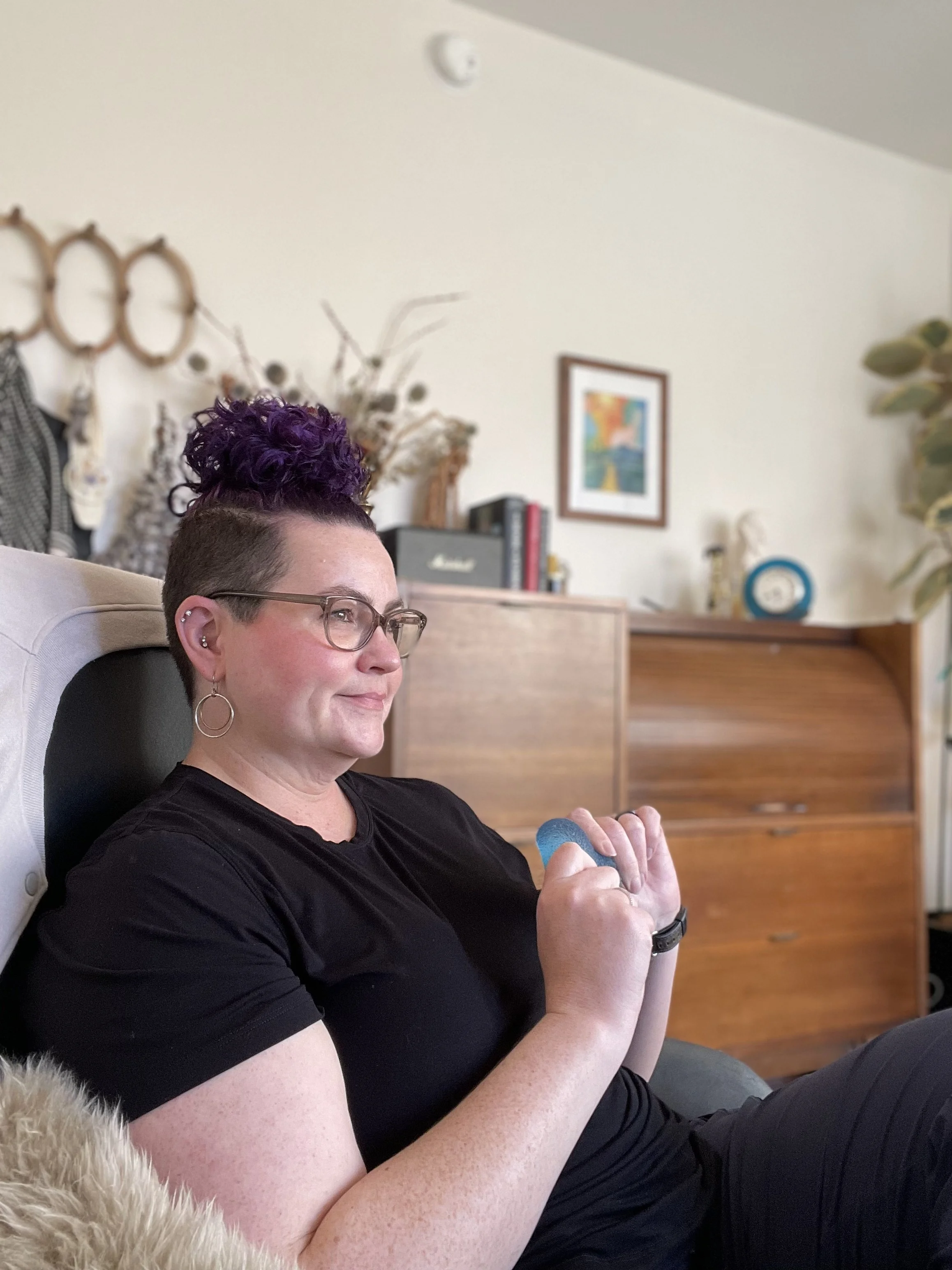
I genuinely love these kids. Not in a "I find adolescent development professionally fascinating" way. In a way that means I'm usually sitting there with a big grin on my face as your teen is passionately telling me about their interest. In a way that means I'm belly-laughing right alongside them—because your kid is genuinely delightfully funny. In a way that means I'm just as game for silence as I am for talking (with periodic check-ins to make sure it's still "good" silence)—because sometimes your teen just needs to experience having zero demands alongside someone else. It isn't just your teen that walks away from therapy feeling better—I do, too.

Reach out for a 15-minute consultation call.

what we do in therapy
The most important work of being a teenager is discovering two things: "who am I?" and "how do I work?" Unfortunately, those are also incredibly difficult tasks when life is already so demanding. Teens get there when they feel safe enough to let go of the people pleasing long enough to begin to see themselves clearly. They start trying things on—a way of talking, a way of feeling, a way of responding—and discarding what doesn't fit or doesn't work. That includes the harder stuff, too: what tends to overwhelm them, what the warning signs feel like, and what actually helps them come back. Instead of learning and studying a subject in school, they're learning and studying themselves.

what's actually going on
Most parents I work with aren't here because they've given up on their kid. They're here because they love their kid and something isn't landing. The eye rolls, the shutdown, the "I'm fine"—it's easy to read that as obstinance, but usually it isn't. Usually it's exhaustion. A kid who's been performing all day and has nothing left by the time they get home.
Sometimes what looks like moodiness or shutting down is actually a kid whose brain works differently than the world around them expects it to—and nobody's said that out loud yet. A lot of the teens I work with are autistic, ADHD, or some combination, whether or not they have an official diagnosis. Your kid isn't broken, and they're not being difficult on purpose. The world they're moving through every day just wasn't built with their nervous system in mind.
You don't need a diagnosis to start figuring this out, and neither do they. Even in the "we're not totally sure yet" phase, there's real, concrete work we can do—understanding what overwhelms them, what helps them recover, how to ask for what they actually need. That's true whether the answer turns out to be autism, ADHD, both, or just a kid who's wired more intensely than most.

Ready to see if we're a good fit?
I offer free 15-minute consultations—on Zoom or in person.